
Better care starts with better insights. That's why Entia is on a mission to create a world where we live longer and healthier lives because cancer treatment is personalised.
Responsibilities
User Experience, UI Design
Design System, Packaging
Collaborative Team
Product Designer, Researcher
Product Manager, Fullstack Developer
Duration
6 months
Year
2024
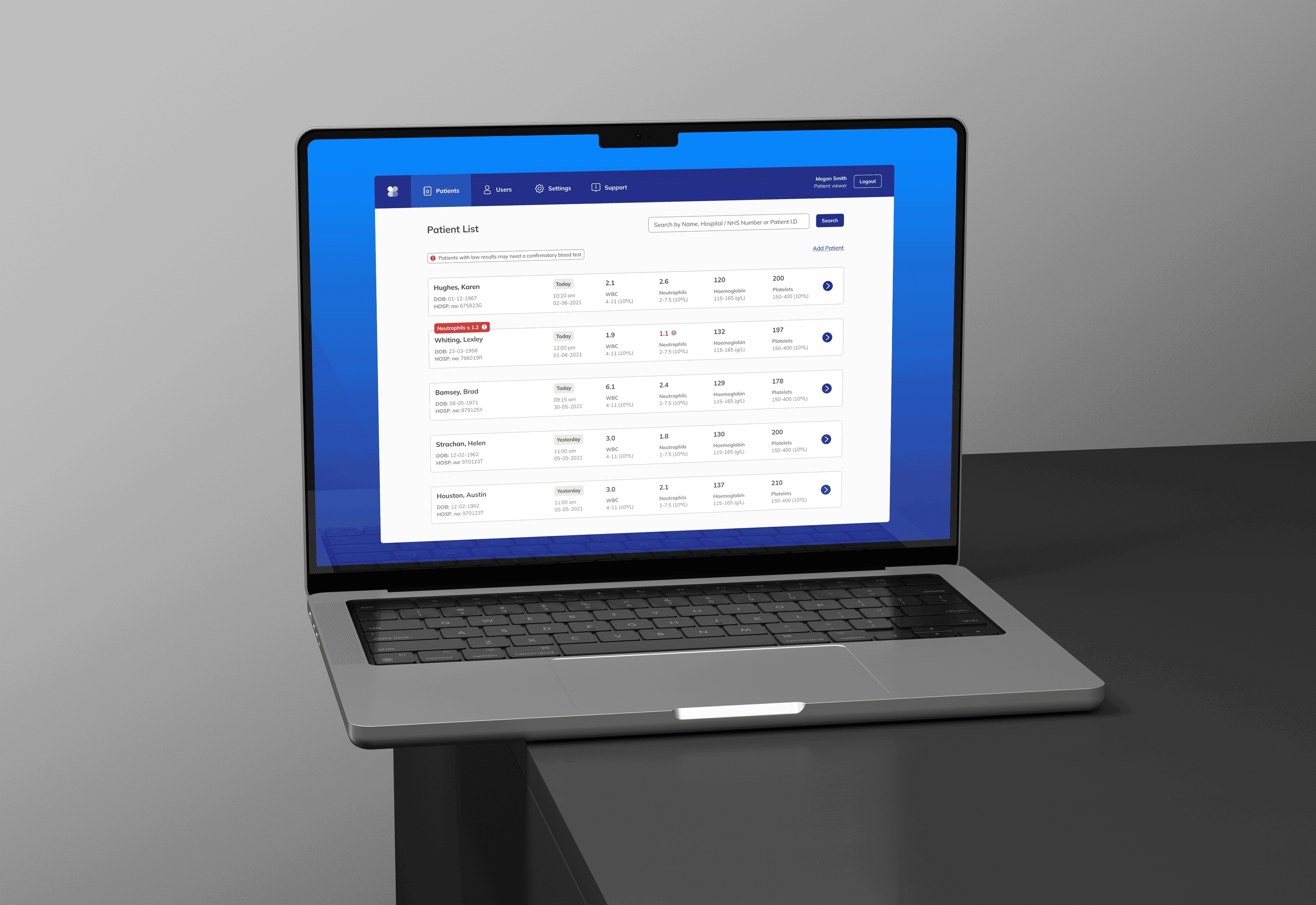
Cancer treatment tends to take over a life. Even when the disease is kept in check, there are an endless amount of tests, appointments and check-ups.
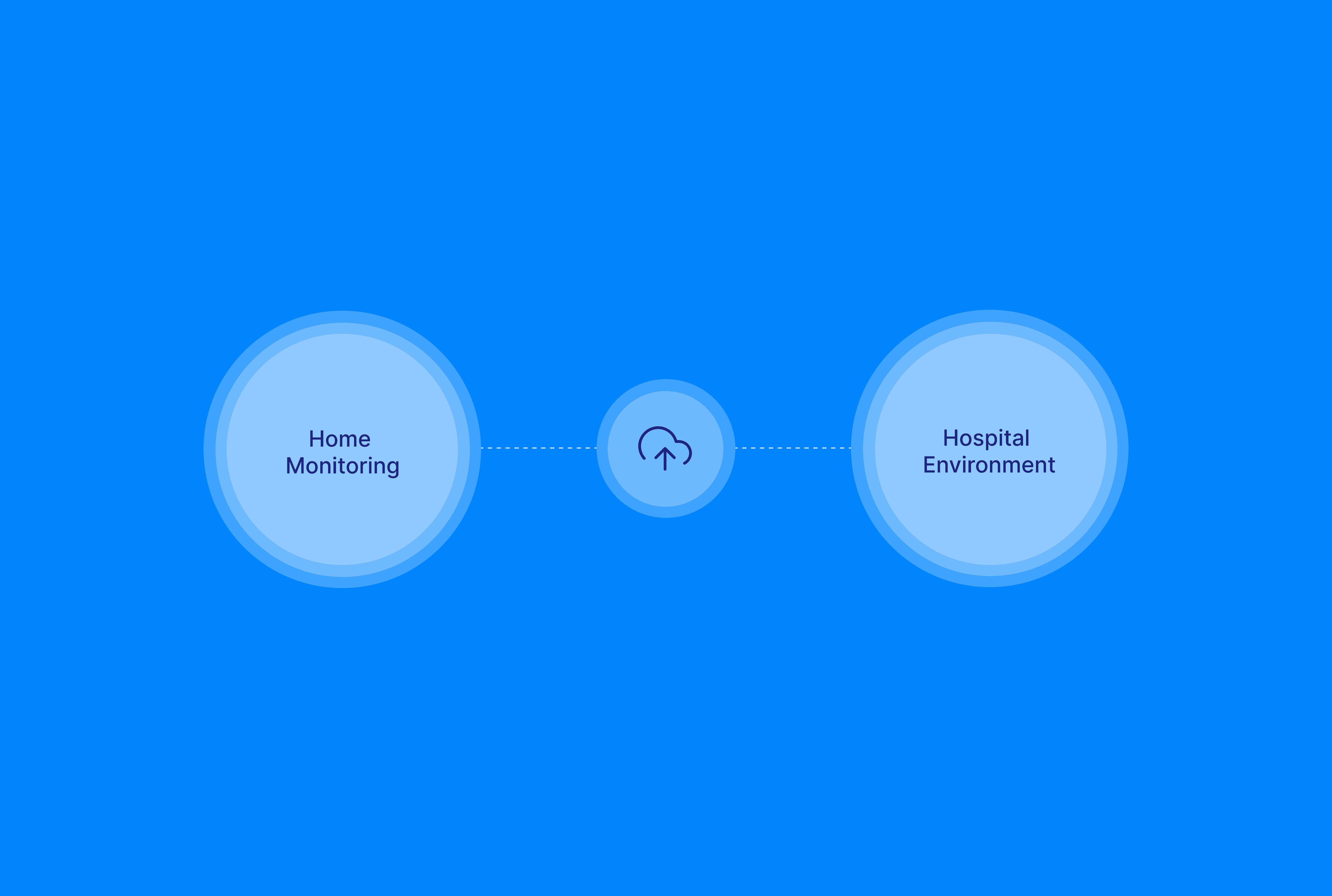
As a team, our objective was to research, strategise and design a digital product that will help healthcare professionals remotely analyse and monitor the toxicity of cancer treatments.
Phase One: Empathise
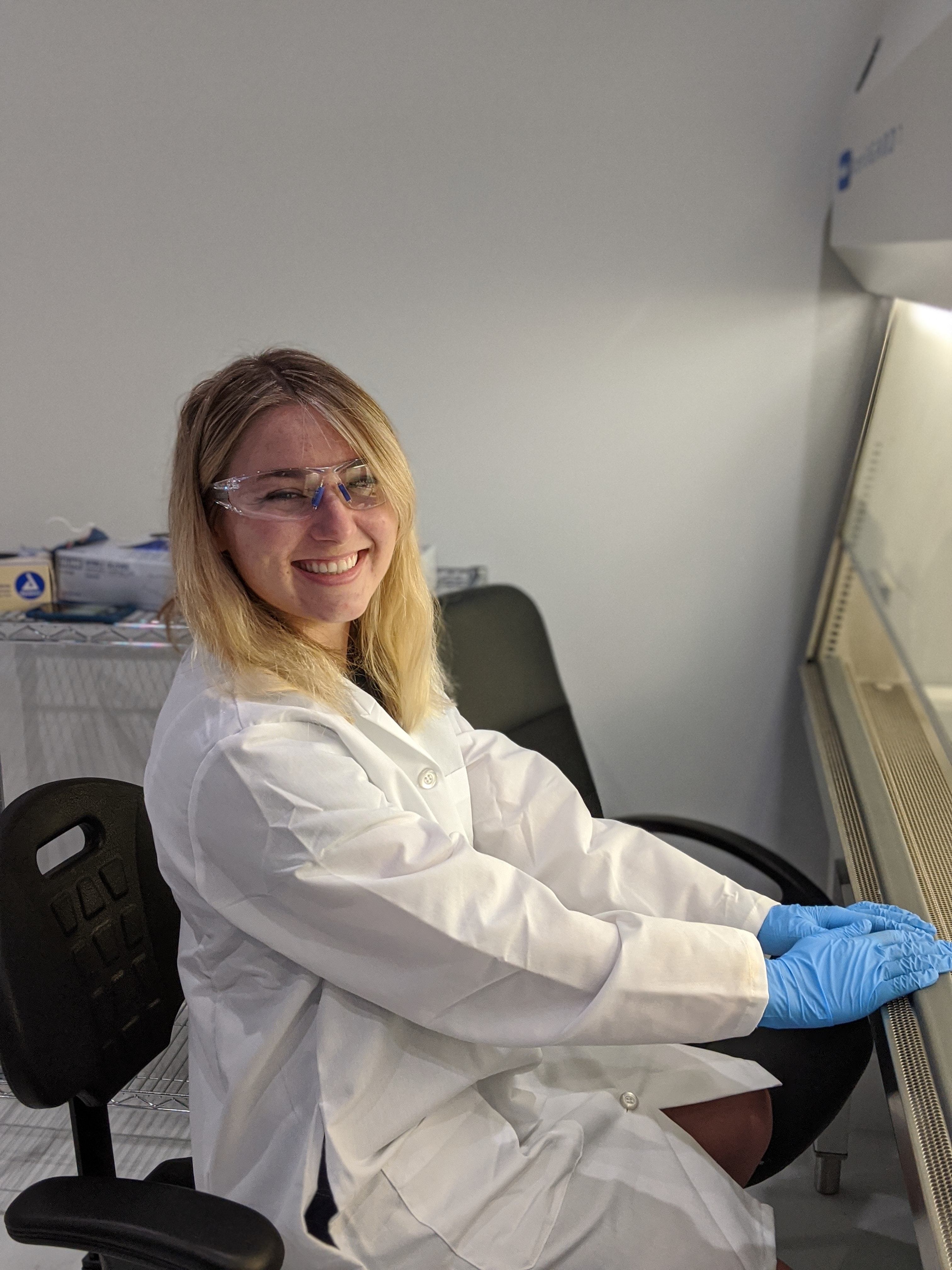
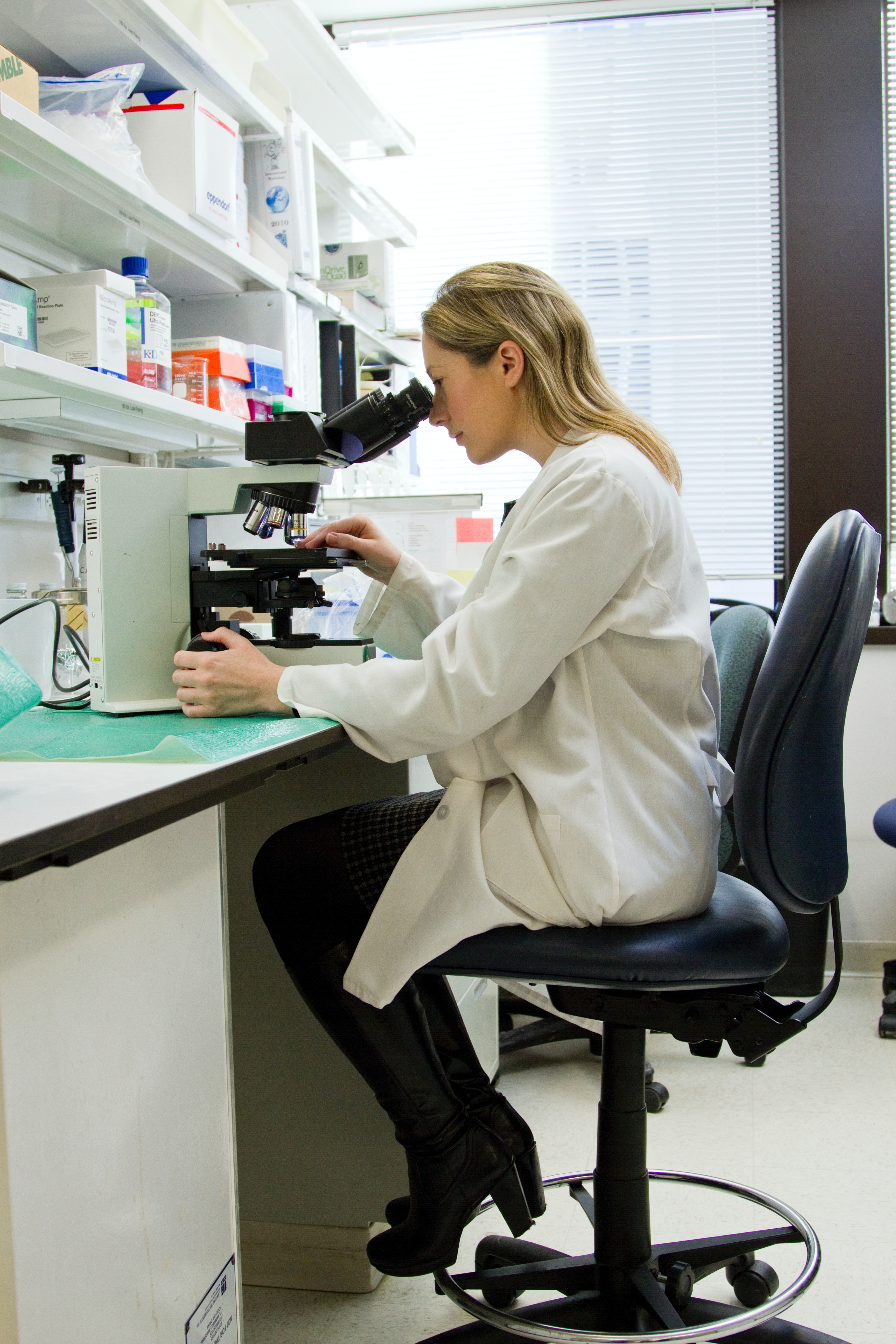
We spoke with healthcare professionals during a research sprint to understand what they wanted, needed and expected from a digital medical product. Below are some of the insights gained during our research that influenced the final design:
Challenges
Doctors and nurses are often rushed because of demanding timeframes and staff shortages
Beliefs
When it comes to communication, "simple and effective" is the mantra throughout hospitals
Needs
Displayed information needs to be easily accessible all levels of ability throughout the experience
Phase Two: Conceptualise
The data was gathered into key clusters of information to help us craft a product strategy and develop the desired experience. At this point, we wanted to achieve the following before jumping into design:
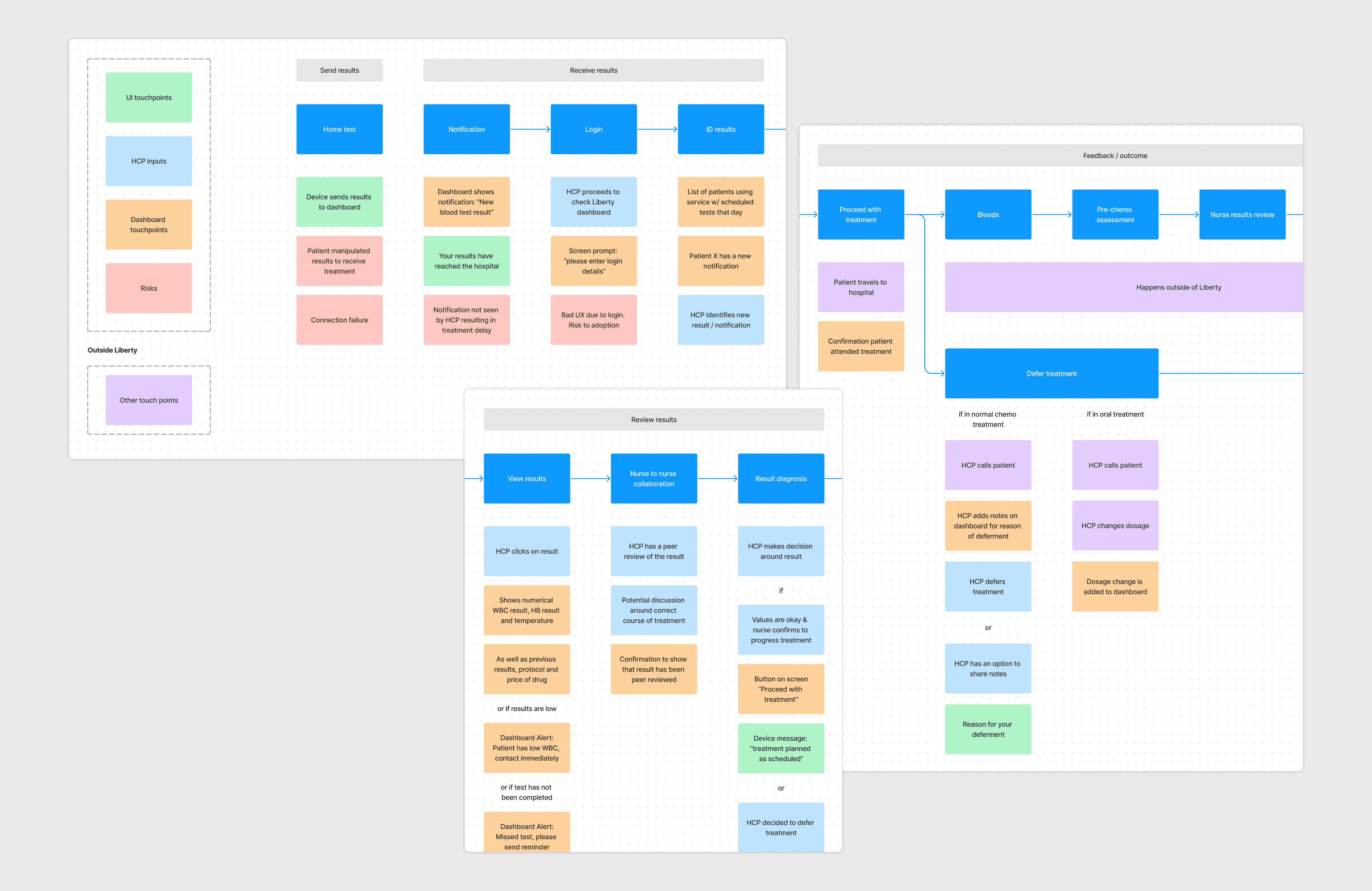
Understand healthcare workflows
Journey maps helped the team visualise processes with particular user goals in mind
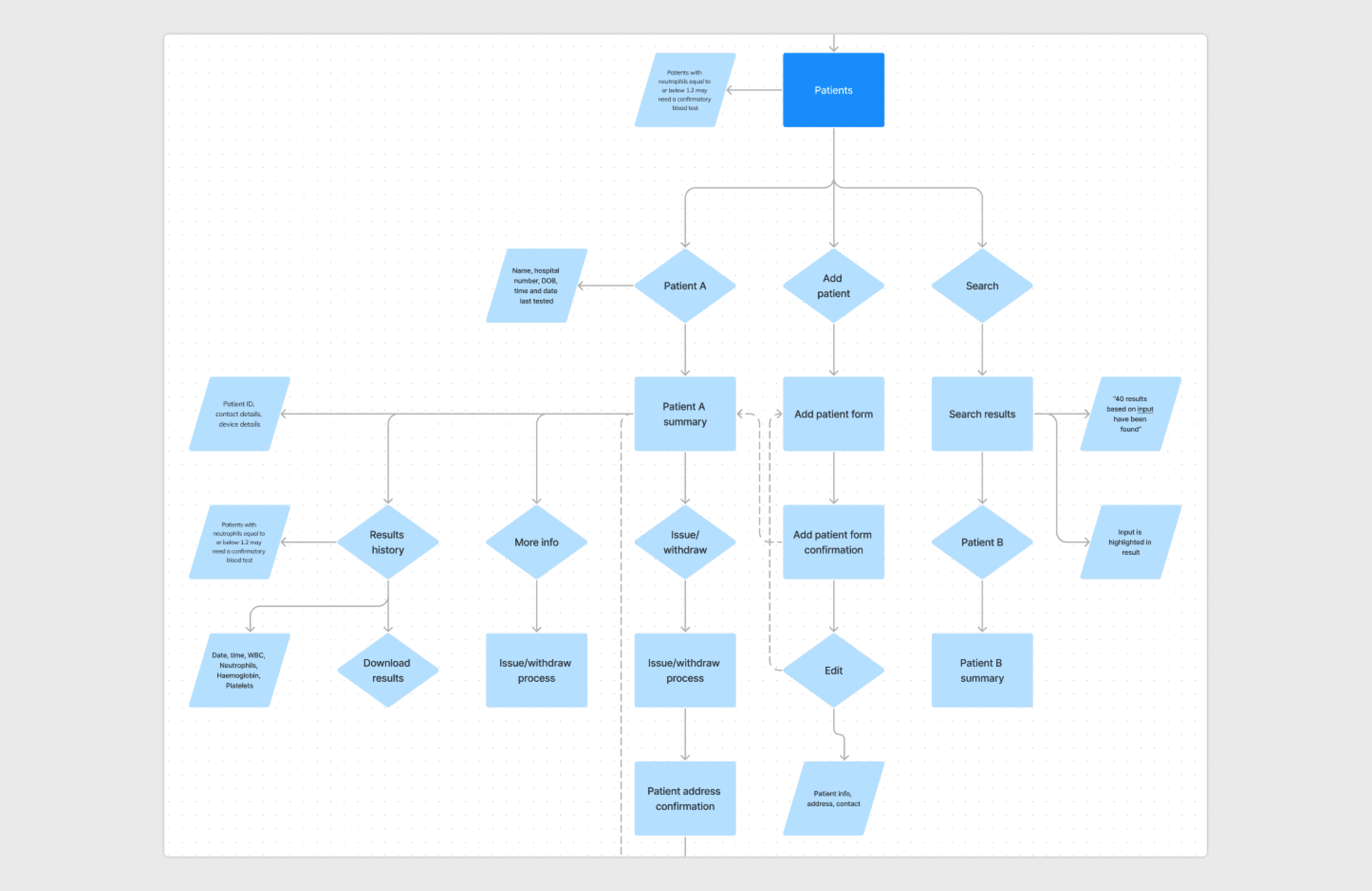
Structure the product
Information architecture diagrams were used to ensure the most important tasks could be easily found
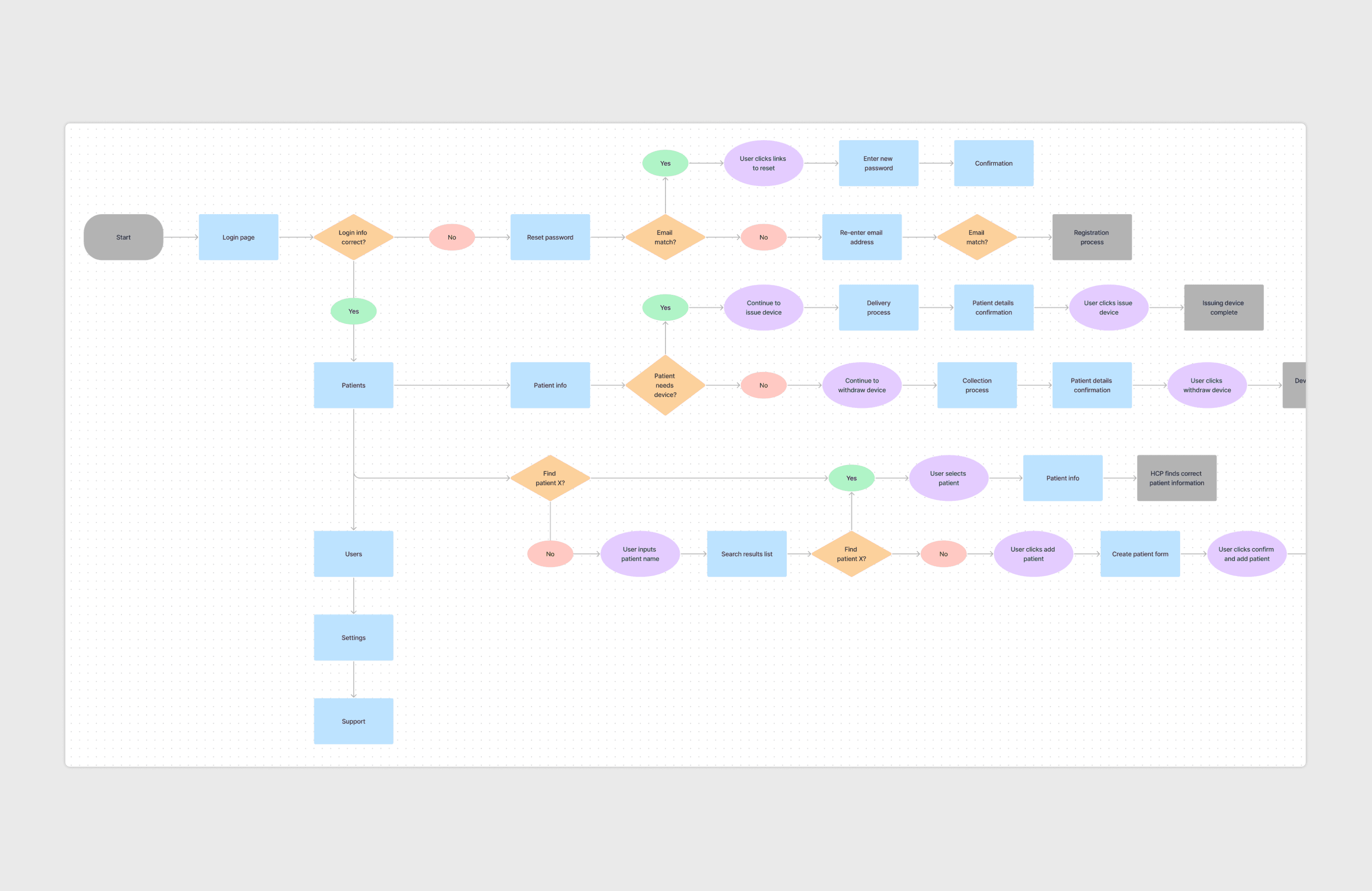
Streamline specific tasks
We used user flow diagrams as a tool to evaluate the efficiency of how screens link together
Phase Three: Design
The developers needed to start building as soon as possible so as a design team, we made three key decisions that allowed us to meet the tight deadline:
Evaluate ideas at speed
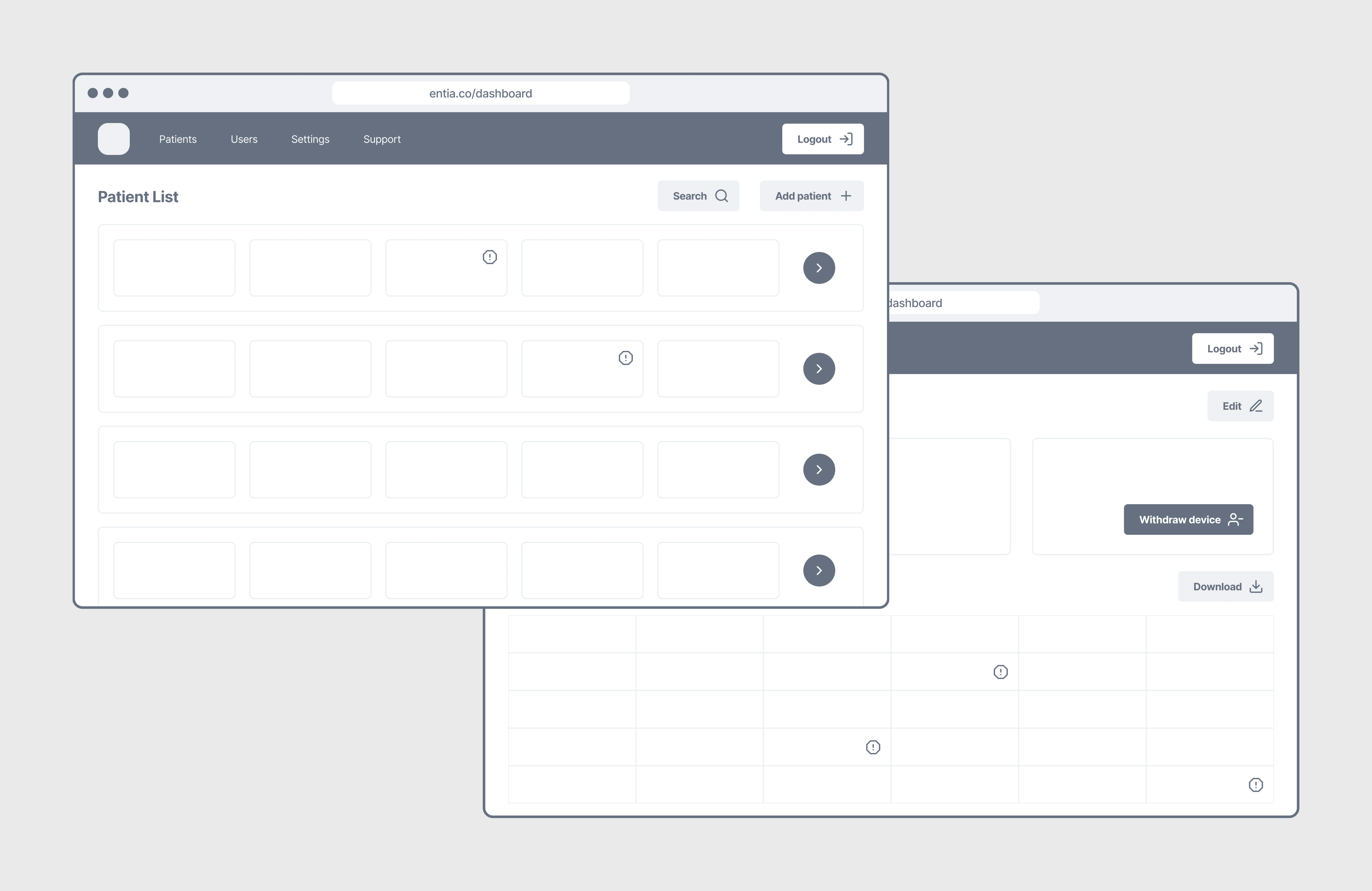
Low fidelity wireframes helped team members review concepts, without finessing the design details
Stakeholder buy-in
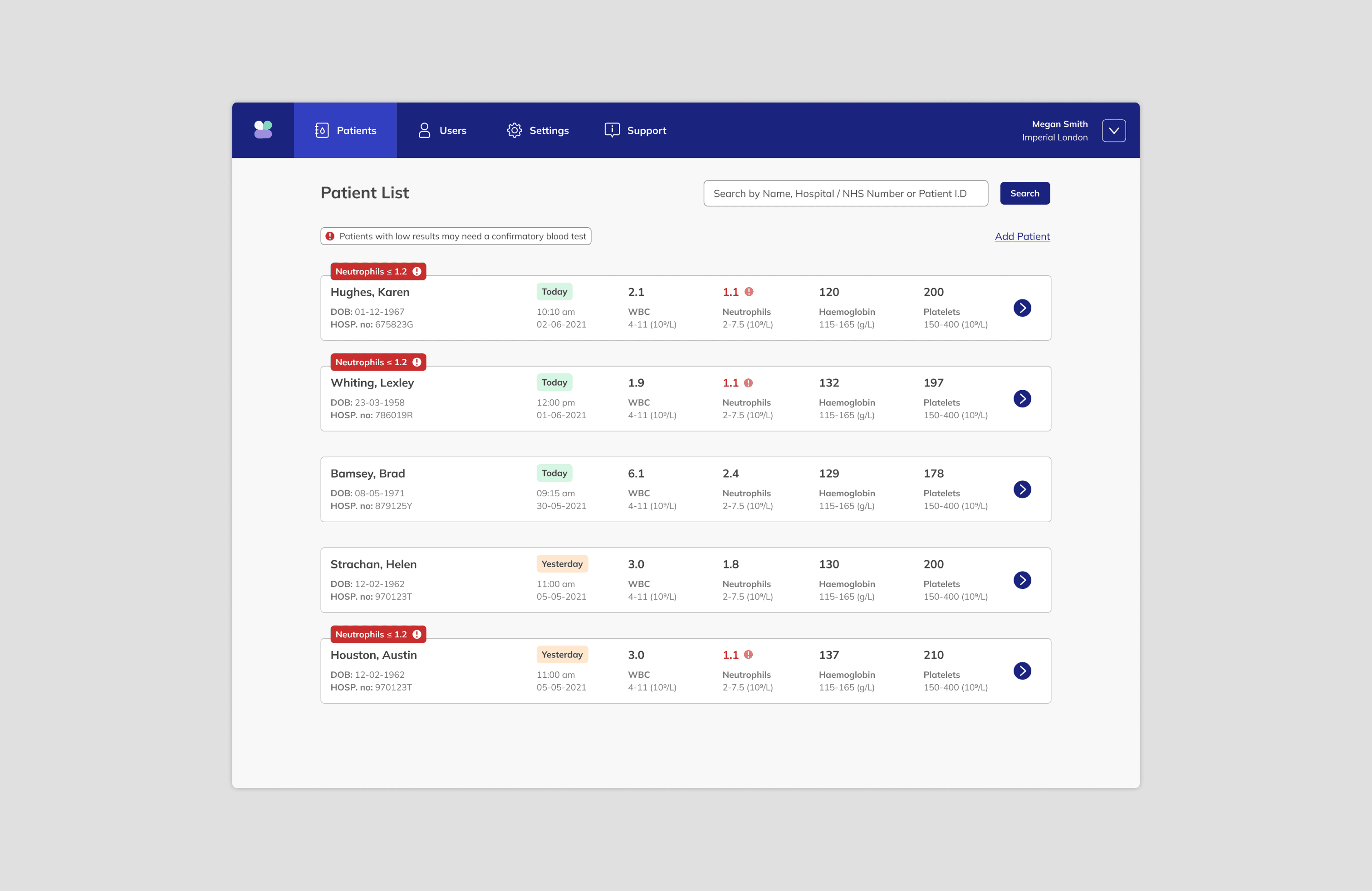
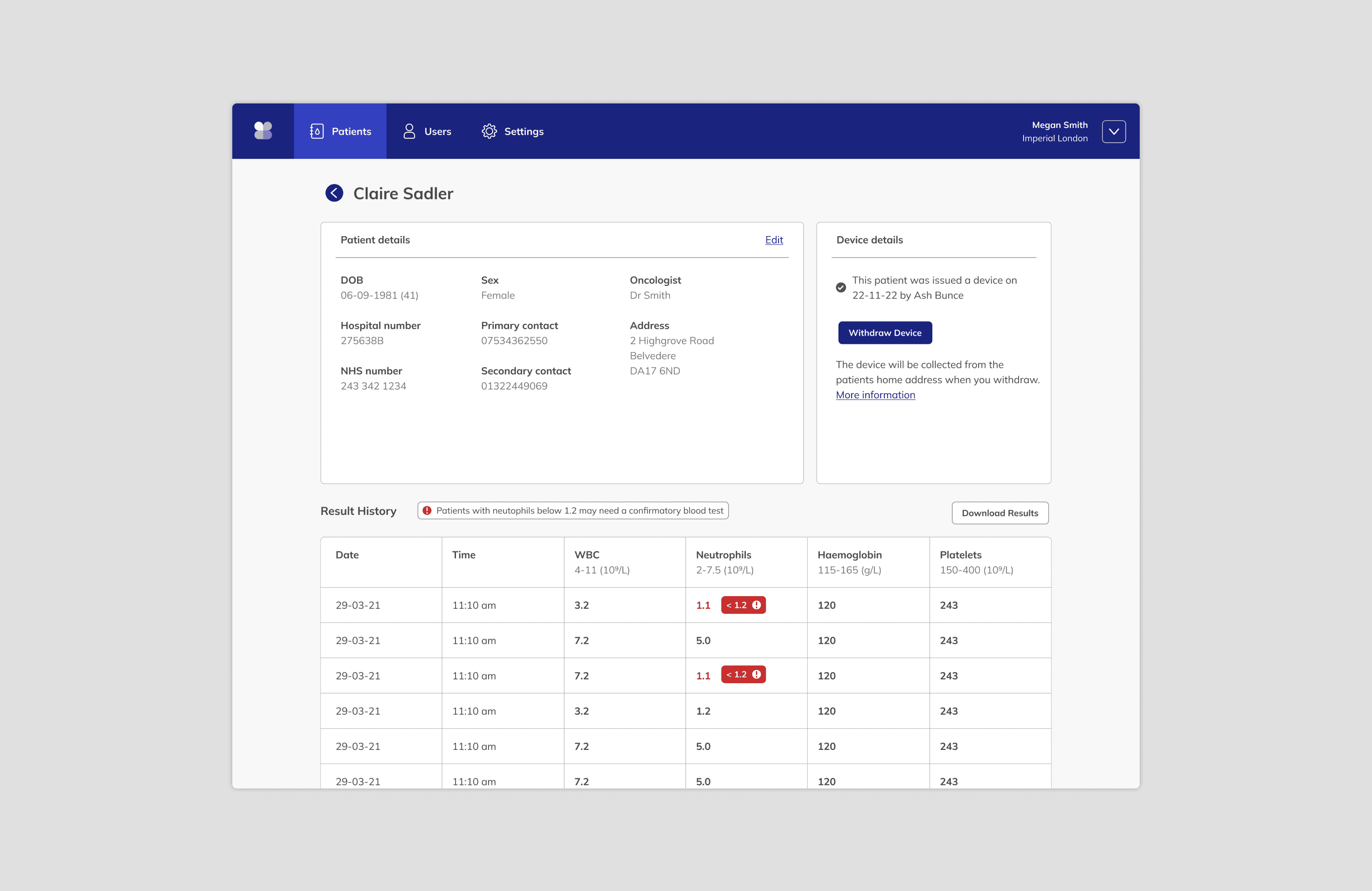
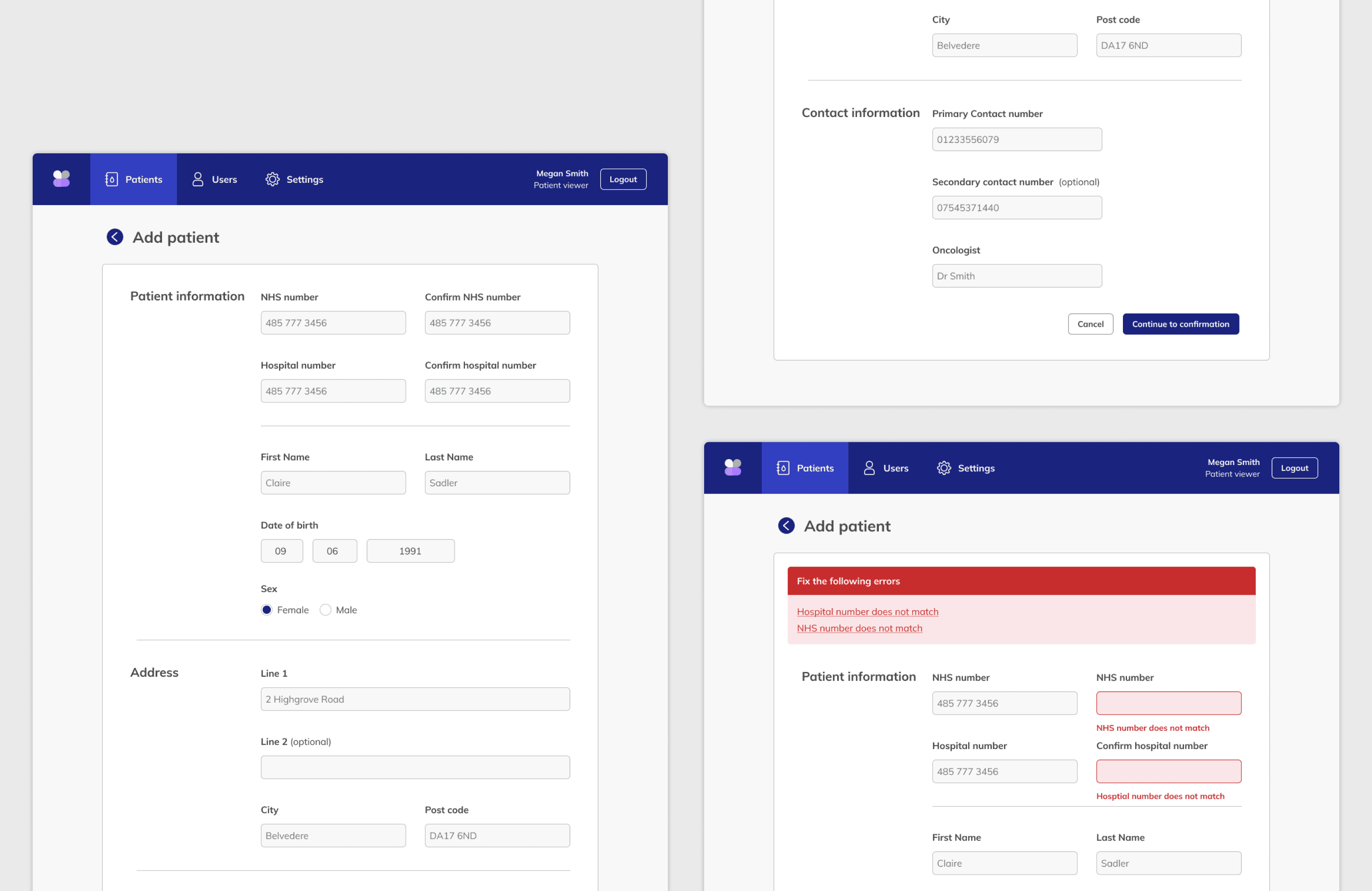
We focussed on three screens to confirm the visual language in order to get feedback as soon as possible
Streamline the process
A design system optimised the design and development process while unifying the visual language
Accessibility
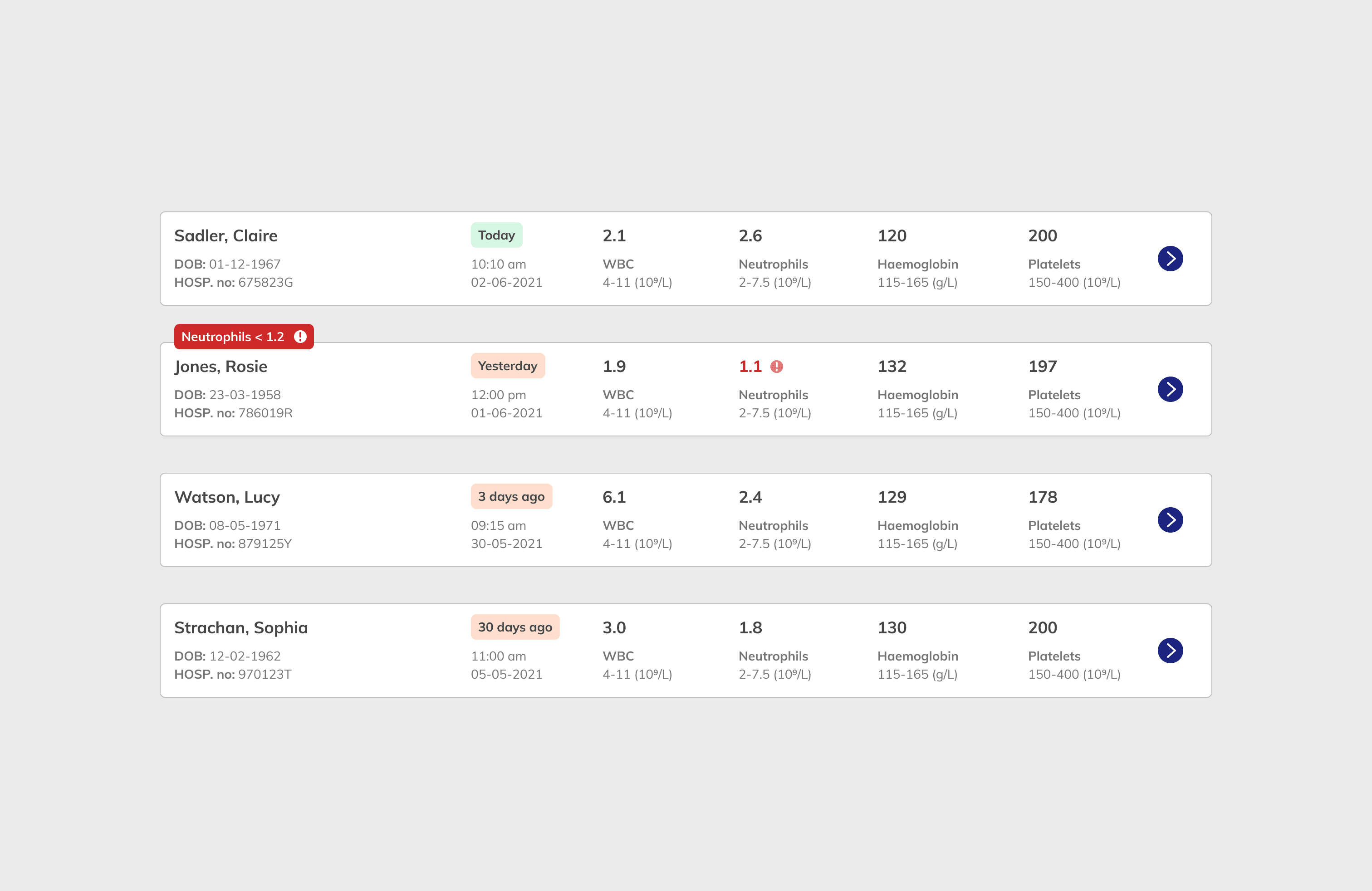
Coloured chips are used in the result cards to draw attention to different levels of severity. Red indicates a high-level alert, amber suggests something less severe and green signals something positive.
The low neutrophil chips appear on top of the card when the neutrophil count is below the value set by the user. The neutrophil result (below the threshold) also appears in red along with an icon.
The warning icon is for accessibility purposes as someone with visual impairment like colour blindness may not be able to see the red type.
Conclusion
We successfully launched the MVP six months later, achieving the following milestones:
Accessibility
The MVP initially reached mid-range conformance in relation to WCAG AA 2.1
Commercial Success
Investors such as Pfizer backed Entia, receiving approximately £15M in Series A funding
Usability
92% NPS (Net Promotor Score) with oncologists referring others and Average SEQ (Single Ease Questions) score was 4.25